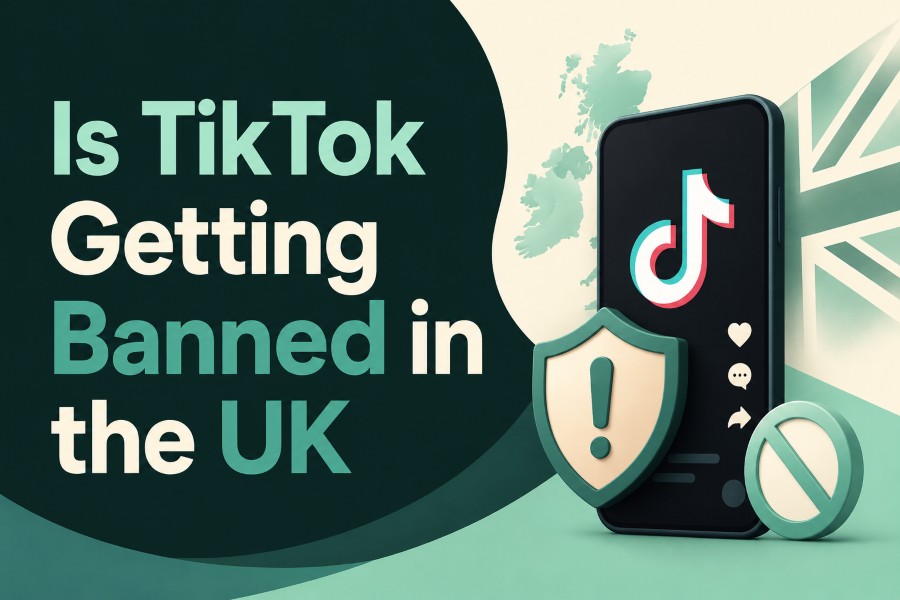
If you have seen recent headlines and wondered, “Is tiktok getting banned in the uk?”, you are not alone. Many UK users are confused because the word “ban” is being used in different ways. Some reports talk about TikTok being banned on government devices. Others discuss social media restrictions for children under 16. Some focus on data privacy, online safety, age checks, and the role of Ofcom.
The important point is this: a full UK-wide public ban on TikTok is different from targeted restrictions. TikTok is not simply disappearing from every UK phone overnight. However, the app is already restricted in certain government settings, and it may face stronger rules for younger users, privacy, safety features, and age verification.
This matters for different people in different ways. Parents want to know if their children will still be able to use TikTok. Creators want to know if their audience or income could be affected. Small businesses want to know whether TikTok campaigns are still worth planning. Everyday users simply want a clear answer without political noise or confusing legal language.
This guide explains what is currently happening, what a TikTok ban in the UK really means, who may be affected, and what practical steps you can take now.
Is TikTok getting banned in the UK?
TikTok is not currently banned for all UK users, but it is banned on UK government devices and may face stricter rules under online safety and age-related regulations. The biggest expected impact is likely to affect under-16 users, age verification, privacy controls, and platform safety duties rather than every adult TikTok user.
Is Tiktok Getting Banned in the UK or Just Restricted?
TikTok is not currently banned for all ordinary UK users. You can still download the app, open your account, watch videos, post content, follow creators, run ads, and use TikTok as a normal user. The confusion comes from the fact that the UK has already introduced specific restrictions, and more rules may affect how TikTok works in the future.
The first major restriction is the TikTok government device ban UK. In 2023, the UK government banned TikTok from government electronic devices because of security concerns. This rule applies to official government phones and devices, not to the personal phones of regular citizens.
That means a student, parent, creator, shop owner, or casual user can still use TikTok in the UK. The government-device ban does not automatically mean the public version of TikTok is being removed.
The second issue is child safety. The UK has been moving towards stronger rules for social media platforms under the Online Safety Act. These rules are not only about TikTok. They also affect platforms such as Instagram, Snapchat, YouTube, Facebook, X, and other services where users can share content, communicate, or be exposed to harmful material.
The third issue is age verification. TikTok age verification UK rules may become stricter as regulators push platforms to protect children from harmful content. This could mean stronger age checks, safer default settings, limits on certain features, or restrictions for younger users.
So, when someone asks, “Is TikTok banned in the UK?”, the most accurate answer is: no, not for the general public. But TikTok is facing targeted restrictions, especially around government use, children’s safety, data security, and age assurance.
The difference matters. A full ban would mean TikTok becomes unavailable to most or all UK users. A restriction means certain users, devices, features, or age groups may be affected while the platform continues operating.
Why Are UK Officials Concerned About TikTok?
The debate around TikTok in the UK is not based on one single concern. It combines security, privacy, child safety, political pressure, and broader worries about how social media platforms influence users.
Data Security Concerns
One of the biggest concerns is data security. TikTok is owned by ByteDance, a company based in China. Some governments worry about whether user data could be accessed or influenced in ways that create national security risks. TikTok has repeatedly said it protects user data and has worked to address concerns, but the issue remains politically sensitive.
This is why the UK government-device ban matters. Government phones may contain sensitive information. Even if the risk is debated, officials often take a stricter approach with public-sector devices than with personal devices.
Child Safety Concerns
The second major concern is children’s safety. TikTok is highly popular with young people, and its endless video feed can keep users engaged for long periods. Parents and regulators worry about exposure to harmful content, strangers, addictive design, beauty pressure, misinformation, and late-night scrolling.
This is where the Online Safety Act TikTok discussion becomes important. The law pushes platforms to take more responsibility for reducing harm, especially for children. It is not only about removing bad content after someone reports it. It is also about designing safer systems before harm happens.
Age Verification and Under-16 Access
The TikTok under 16 ban UK debate is part of a wider question: should children under 16 be allowed to use major social media platforms at all? Some policymakers argue that age limits would help protect children. Critics argue that bans may be hard to enforce and could push young people to less visible or less safe online spaces.
For users, this means future TikTok access may depend more heavily on age checks. Platforms may need to prove that younger users are protected or blocked from certain features.
Algorithm and Content Concerns
TikTok’s recommendation system is another reason regulators pay attention. The “For You” feed learns what people watch and quickly shows more of it. This can be entertaining, but it can also trap users in repetitive content loops. For younger users, that raises concerns about mental health, body image, misinformation, and harmful trends.
The UK debate is therefore not simply “TikTok good” or “TikTok bad.” It is about how powerful social platforms should be regulated when they shape what millions of people see every day.
Who Would Be Affected by UK TikTok Restrictions?
UK TikTok restrictions would not affect everyone in the same way. The impact depends on your age, how you use the app, and whether you use TikTok personally, professionally, or through public-sector work.
Here are the main groups likely to be affected:
- Government workers: TikTok is already restricted on official UK government devices.
- Under-16 users: Future social media rules could limit or block access for younger users.
- Parents: Parents may need to manage age checks, Family Pairing, and privacy settings more closely.
- Creators: Creators may see changes if younger audiences lose access or if safety rules affect content reach.
- Small businesses: Brands using TikTok marketing may need to adjust campaigns if audience access changes.
- Schools and youth organisations: They may need clearer policies around TikTok use, safeguarding, and online behaviour.
- Adult users: Most adult users are unlikely to lose access immediately, but privacy and verification rules may still change the app experience.
For example, a 35-year-old business owner using TikTok to promote a bakery is not in the same position as a 14-year-old using TikTok late at night. The business owner may still be able to post videos and run campaigns. The teenager may face stricter age checks, feature limits, or access restrictions if under-16 rules move forward.
Parents should pay special attention to TikTok Family Pairing and Digital Wellbeing tools. These features can help manage screen time, direct messages, content preferences, and privacy controls. They are not perfect, but they are practical tools while wider regulation develops.
Creators should also prepare for audience changes. If under-16 access becomes restricted, content aimed at young teens may lose reach. Creators in education, entertainment, gaming, fashion, beauty, and lifestyle niches may need to understand their audience age mix more carefully.
Small businesses should not panic. A UK TikTok ban for all adults is not the current situation. However, businesses should avoid relying on one platform only. A healthy strategy spreads content across TikTok, Instagram, YouTube Shorts, email, search, and website content.
Is a UK TikTok Ban Likely for Everyone?
A complete UK-wide TikTok ban for everyone is possible in theory, but it is not the current direction most users need to plan around. The more realistic direction is stricter regulation, especially around children, safety duties, data protection, and age verification.
There are several reasons why a full public ban would be complicated. First, TikTok has millions of users and many UK businesses use it for marketing. Removing access entirely would affect creators, advertisers, media organisations, charities, musicians, shops, educators, and everyday users.
Second, a public ban would raise questions about enforcement. Would app stores remove TikTok? Would internet providers block access? Would users be penalised? Would VPN use increase? These questions make a full ban much more complex than a government-device rule.
Third, the UK tends to regulate platforms through legal duties and enforcement rather than instantly banning apps for everyone. The Online Safety Act gives Ofcom a central role in setting and enforcing safety expectations. This approach focuses on platform responsibility, risk assessments, child protection, and content systems.
That does not mean nothing will change. TikTok may need to introduce stronger age checks, safer default settings, clearer privacy controls, and better explanations of how content is recommended. Users may see more prompts, restrictions, or verification screens.
The biggest mistake is treating every headline as proof that TikTok will vanish tomorrow. Another mistake is ignoring the direction of travel. The UK is clearly taking online safety more seriously, especially for children.
A useful way to understand the situation is this:
Risk level = User age + Device type + Account purpose + Safety rules + Future regulation
For an adult using TikTok on a personal phone, the immediate risk of losing access is lower. For an under-16 user, the risk of future restrictions is higher. For a government worker using an official device, the restriction already exists.
How UK Users Should Prepare Using the CLEAR Framework
The best response is not panic. It is preparation. The CLEAR Framework can help UK users, parents, creators, and businesses understand what to do next.
CLEAR = Check the current rule + Learn who it affects + Evaluate the reason + Act on privacy settings + Review future updates.
Check the Current Rule
Start with the current reality. TikTok is not banned for all UK users. It is banned on UK government devices, and future rules may affect under-16 users and platform safety features. Do not rely only on viral posts or dramatic headlines. Check GOV.UK updates, Ofcom online safety guidance, and trusted news coverage.
Learn Who It Affects
Ask who the rule applies to. Is it about government employees? Children under 16? All users? Schools? App stores? Content creators? Many misunderstandings happen because people confuse a limited restriction with a total ban.
Evaluate the Reason
Look at the reason behind the rule. Is it about national security, data privacy, child safety, harmful content, age verification, or addictive design? Knowing the reason helps you understand what may happen next.
For example, a data security concern may lead to device restrictions. A child safety concern may lead to age checks or feature limits. These are different outcomes.
Act on Privacy Settings
Open the TikTok app and review your settings. Check your account privacy, direct message settings, comment controls, watch history, personalised ads, and content preferences. Parents can also review Family Pairing and Digital Wellbeing tools.
Practical steps include:
- Set young users’ accounts to private where appropriate.
- Limit who can send direct messages.
- Review screen time settings.
- Turn on restricted mode if useful.
- Check what information TikTok uses for personalisation.
- Remove old videos that no longer reflect your privacy needs.
- Keep your email and phone number updated for account recovery.
These actions help even if no ban happens.
Review Future Updates
This topic will continue changing. The UK government, Parliament, Ofcom, and platforms such as TikTok may announce new rules or guidance. Parents, creators, and businesses should review updates regularly instead of assuming today’s rules will stay the same.
For creators and marketers, the strategic insight is simple: do not build your whole audience on one platform. TikTok can still be valuable, but it should be part of a broader content system. Use TikTok for reach, your website for ownership, email for retention, and YouTube or Instagram for platform diversity.
For parents, the insight is different: rules may help, but they cannot replace conversations. Talk to children about what they watch, who they interact with, what makes them uncomfortable, and when they need a break.
For everyday users, the takeaway is practical. TikTok is still available, but privacy and age rules are becoming stricter. Review your settings now so you are not surprised later.
Conclusion
So, is TikTok getting banned in the UK? Not for everyone right now. TikTok is already banned on UK government devices, and the UK is moving towards tougher online safety and age-related rules. However, that is not the same as a full public ban for every UK user.
The most likely changes involve under-16 access, stronger age verification, safer default settings, privacy controls, and closer Ofcom oversight. Adults, creators, and businesses can still use TikTok, but they should pay attention to future regulation and avoid depending on one platform alone.
The practical next step is to use the CLEAR Framework. Check the current rule, learn who it affects, evaluate the reason, act on privacy settings, and review future updates. This gives you a calm way to respond without panic.
If you use TikTok for entertainment, business, or family communication, keep your account secure, review your privacy controls, and stay aware of UK online safety updates.
FAQs
Is TikTok banned in the UK right now?
TikTok is not banned for the general UK public right now. UK users can still access the app, post videos, and view content. However, TikTok is banned on UK government devices, and future rules may affect younger users and platform safety requirements.
Why did the UK ban TikTok on government devices?
The UK banned TikTok on government devices because of security concerns around sensitive government information. This restriction applies to official government devices, not personal phones used by ordinary UK citizens.
Will TikTok be banned for under-16s in the UK?
The UK is moving towards stronger social media restrictions for under-16s, and TikTok could be included alongside platforms such as Instagram, Snapchat, YouTube, Facebook, and X. The exact rules, timing, and enforcement details may continue to develop.
Can adults still use TikTok in the UK?
Yes, adults can still use TikTok in the UK. There is no current full public ban for adult users. However, adults may still see changes linked to privacy settings, safety prompts, content rules, or age verification systems.
Should UK creators worry about a TikTok ban?
Creators should not panic, but they should prepare. TikTok remains available, but future rules could affect younger audiences, content reach, and platform features. Creators should build audiences across multiple channels, including websites, email lists, YouTube Shorts, and Instagram.
How can parents make TikTok safer for children?
Parents can use TikTok Family Pairing, Digital Wellbeing, screen time controls, restricted mode, and privacy settings. They should also talk openly with children about content, strangers, direct messages, and healthy app use. Settings help, but regular conversations matter too.